
B.Sc. in Animal production
Program Profile
Occupational profiles of graduates
Equipping students with comprehensive knowledge and modern professional practical skills in animal production (Livestock, poultry, fish) and animal products is the main focus of the program. The program covers areas including management, breeding, genetic, biotechnology, hatchery management, physiology, nutrition, livestock (beef, dairy cattle, sheep and goat) and poultry production and marketing. In addition to meat science and technology, dairy science and technology, poultry product technology.
Qualification awarded
B.Sc. in of animal science
Length of programme
4 years (8 semesters)
Number of credits
240 ECTS credits
Mode of Study
Full time
Read more about the programme
Get detailed information about the programme requirements, courses, credits, and educational objectives as a PDF file.
Program Educational Objectives (PEOs)
1-Meet students' educational needs by providing them with wide theoretical and practical skills and understanding in basic animal production disciplines. Ensure graduates have the skills and attitudes to render services to a thriving and modern livestock sector.
2-To maintain a leading role in the pursuit of knowledge of animal genetic resources, physiology, nutrition, production systems, generation of knowledge and technologies through quality training and research for animal security and sustainable development
3- Provide the animal production industry with skilled and qualified personnel. Extend knowledge and skills to the farming communities for purposes of improving animal science and production.
4- Conduct scientific and applied research into animal farming demands and provide animal science and production consulting services to the public and private sectors.
5-Provide and teach integrated management procedures and strategies for maximizing the utilization of various farm resources to solve problems in animal production.
Program Learning Outcomes
After successfully completing this programme, students should have:
1- Apply scientifically based practices for the care, management, and study of managed animals and animal products.
2- Solid foundation in heredity, gene function, and genetic variation, integrating classical inheritance with modern molecular techniques such as PCR, gel electrophoresis, DNA sequencing, bioinformatics and applying these concepts to animal production field.
3- Firm understanding of the general physiology and development of the animal body (ruminants, poultry and fish). knowledge of function at the cellular level to the complex operation of major body systems.
4- An ability to identify, detect the symptoms and treat different animal and poultry diseases. In addition to different applied vaccination programs.
5- Acquire practical knowledge in different houses design, housing and rearing systems of domesticated animals
6- Acquire management skill and have the ability to supervise small and large animal enterprises.
7- Expand the creative skills in meat, dairy and poultry product technology and serve the markets in different animal based products.
8- Acquire applied nutritional knowledge and have the ability to formulate animal feeds.
9- Build basic knowledge in fish production, nutrition and management
10- Acquire good statistical and experimental design and have the ability to analyze and interpret data.
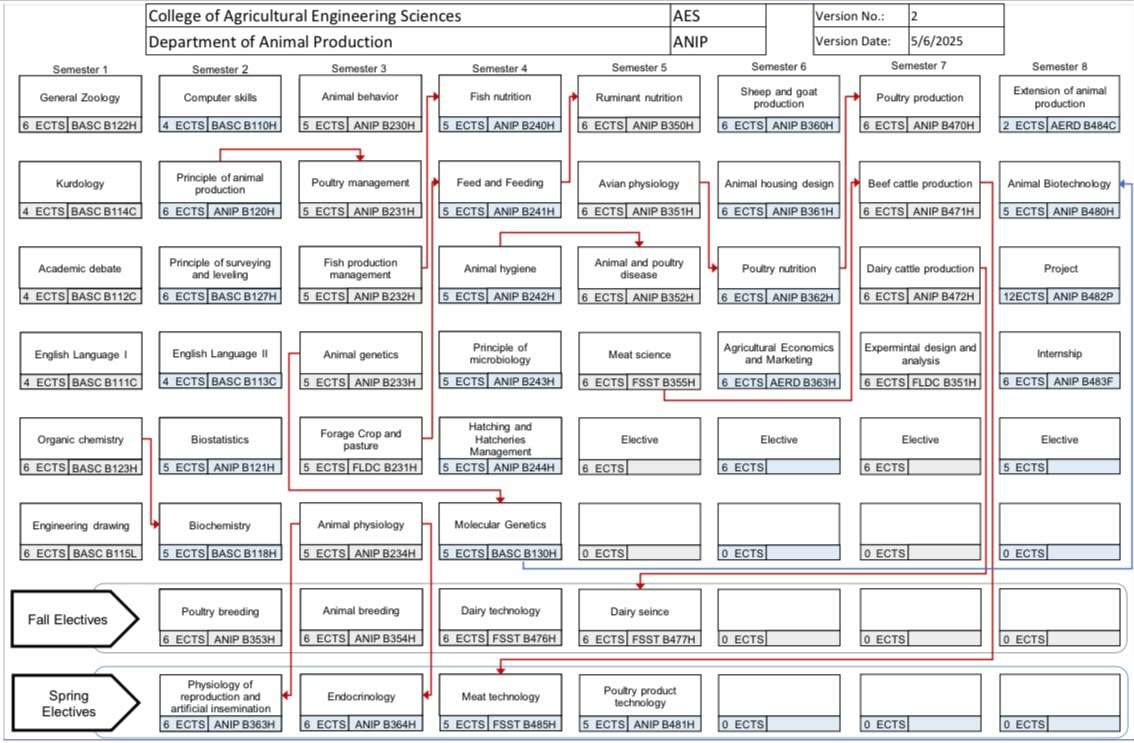
Programme structure diagram with credits
Yearly Timeline
Sept. 1, 2026
⚠️ First year students start around mid-October
⚠️ First year students start exams around 20 of January
July 1, 2027
Check out the full academic calendar on UoD's webstie.
Programme Coordinator

Professor in Poultry Physiology
Animal Production
College of Agricultural Engineering Sciences
University of Duhok
Apply to the Programme
Public undergraduate admissions in the KRG region are managed centrally by the Ministry of Higher Education through the online ZankoLine portal (regayzanko.com). After Grade 12 Baccalaureate results are released, high schools provide students with unique login credentials to rank their preferred universities and B.Sc. majors during a 10–14 day registration window. Final placement is automatically determined by the student's Grade 12 average, subject choices, and department capacity.